
What was your first concert? Where would you go on an all-expenses-paid trip? We’ve all been asked an icebreaker like these. It’s a little awkward, but it works, because it gets people engaged. This fall we’re applying the same idea to embodied carbon with the Icebreaker Initiative, releasing a suite of tools called BuiltCold Essentials to help project teams get engaged with material data before any government agency asks them to.
There is a second reason we chose the name. The world’s ice is disappearing, and the pace is not slowing. For us, that urgency means making it even easier for governments to put clean construction policies in place. One of the biggest hurdles for any new program is a construction community learning to report something new. The more familiar teams already are with their material data, the less friction a program meets. Through the Icebreaker Initiative, our goals are to educate the industry ahead of that moment and to do it for free.
01Introducing BuiltCold Essentials
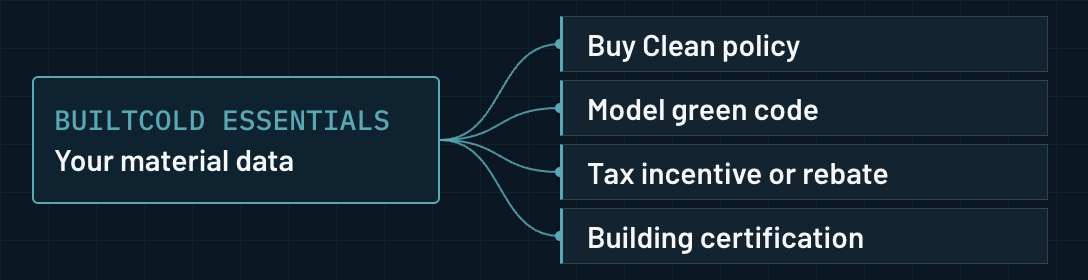
Essentials is free for project teams. Learn it once, use it on any BuiltCold program. That means a Buy Clean mandate, a model green code, or a government-sponsored incentive can all draw on the same material data your team already assembled.
- 01Report material dataHand off quantities and EPDs across the whole project, from pre-design to as-built.
- 02Find compliant suppliersSearch verified EPDs by material and location, drawn from data partners like Building Transparency’s EC3.
- 03Learn the processGet familiar with clean construction programs before one applies.
- 04Bring your whole teamUnlimited seats and projects at no cost.
02Partnering with universities
Universities are quietly doing some of the most important work in this field. In the US and abroad, faculty are helping governments understand their construction sectors and the material emissions inside them. They’ve been part of our work from the start, and this month we’re giving them better access to the platform to amplify what they already do.
These expanded partnerships give faculty and students the same platform governments use to run their programs. Universities can teach on it, operate programs on it for public partners, and study the data those programs produce.
03Support for Canadian teams
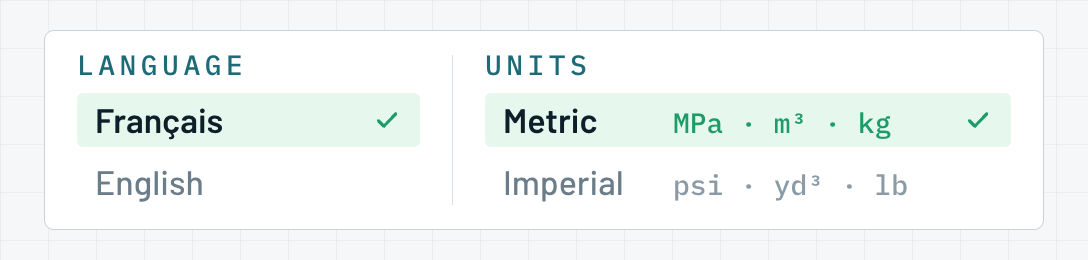
Canada’s progress toward cleaner construction has been incredible to watch. To better support our Canadian partners, BuiltCold now has multilingual support, starting with French, and we’ve converted the whole platform to metric, down to every formula and calculation. The same updates open the platform to teams across Europe and beyond.
04Out and about
- 01Greenbuild (October 20–23)We’re in New York all week, with a Tuesday morning panel at the Materials Summit, “In a New York Minute: Innovators Bridging the Digital Materials Divide.” Come say hello if you’re in town.
- 02ECO Platform Summit (November 17–18)It’s been encouraging to see BuiltCold introduced to more European governments and partners this year. We’re excited to be on the ground in Brussels to better understand how we can support them. If you’re attending, we’d love to connect.
- 03RoadLCA 2026, a recapWith BuiltCold now supporting horizontal construction, hearing how researchers across Europe and North America think about scaling low-carbon materials was the highlight of the trip. More from the symposium.
- 04Getting to Zero Forum, a recapTwo state partners on one stage was a first for us. Hanna Waterstrat of Washington’s Department of Commerce and Adam Berry of the Colorado Energy Office presented, and we followed on the Data & Tools panel. Our thanks to Ariel Brenner and the New Buildings Institute for the invitation.
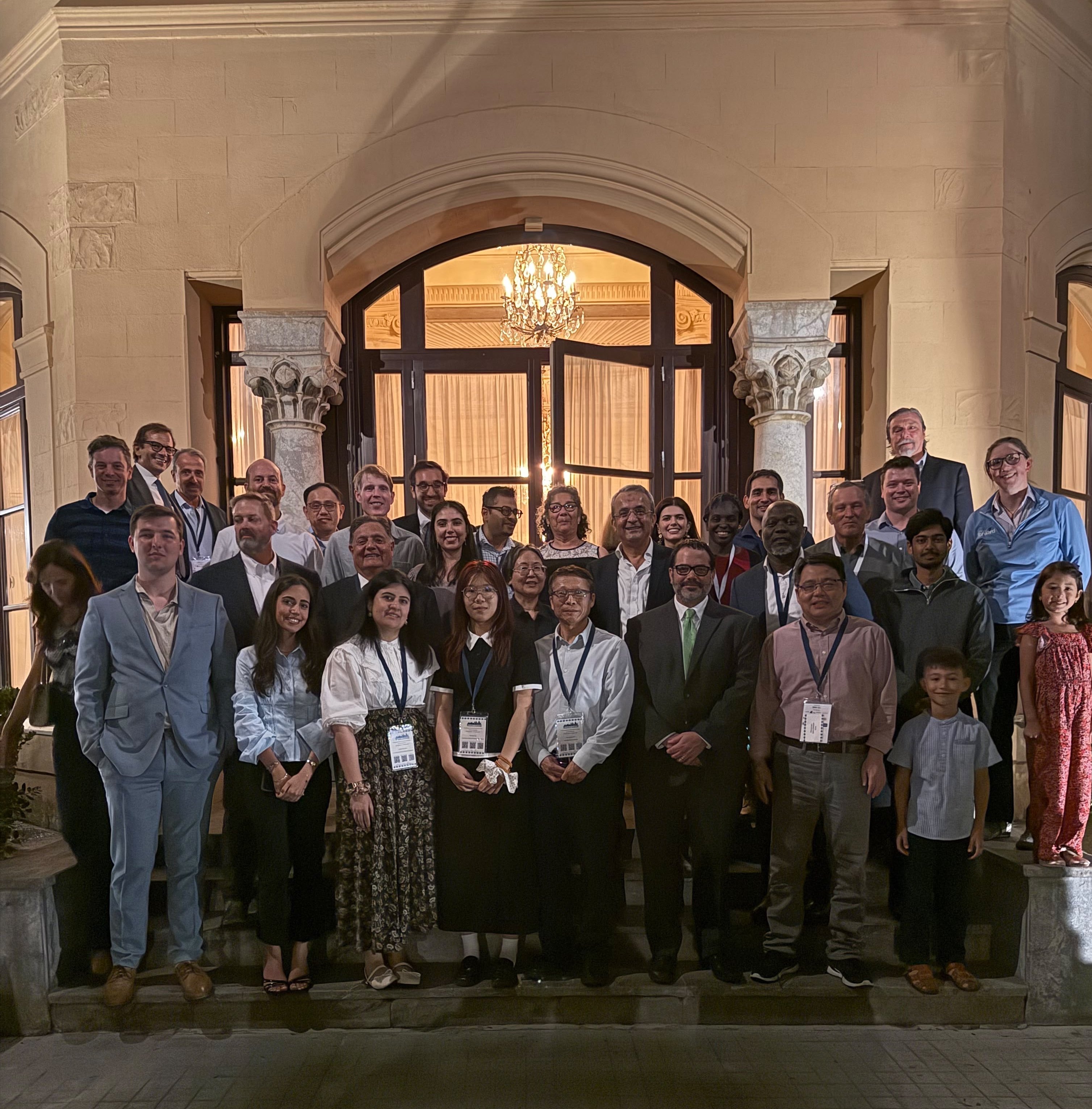
BuiltCold at RoadLCA 2026 in Palermo.
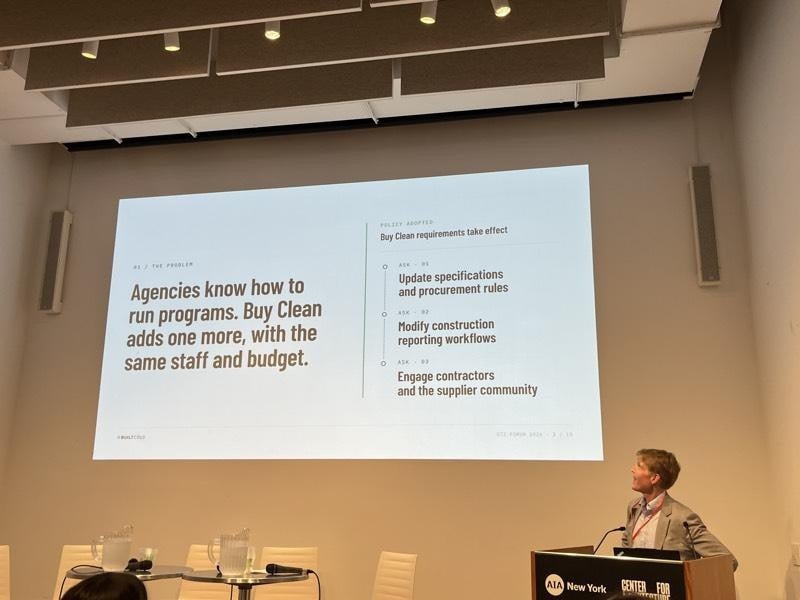
On the Data & Tools panel at the Getting to Zero Forum. Photo courtesy of Mikhail Haramati.