After years of work, building codes are starting to incorporate embodied carbon, a pivotal catalyst for the wider use of cleaner construction materials in the private sector. One challenge that has stymied code adoption has been the perceived compliance burden, and whether code officials and project teams could carry the work. Colorado is investing in minimizing this burden for both, and we’ve got big news to share.
01Colorado Energy Office selects BuiltCold
The Colorado Energy Office has selected BuiltCold to support the Colorado Model Green Codes’ embodied carbon pathways, a major milestone for us.
Our platform has historically served governments running green public procurement programs, where an agency buys construction materials for its own projects. Colorado is pioneering something new. The Energy Office administers the program and makes BuiltCold’s tools available to the commercial construction industry, so teams complying with the codes can do so faster, more effectively, and at lower cost.
The implementation is well underway, and if you’re looking to pursue the Model Green Code, we’d love to hear from you at partner@builtcold.com.
02A pathway more projects can adopt
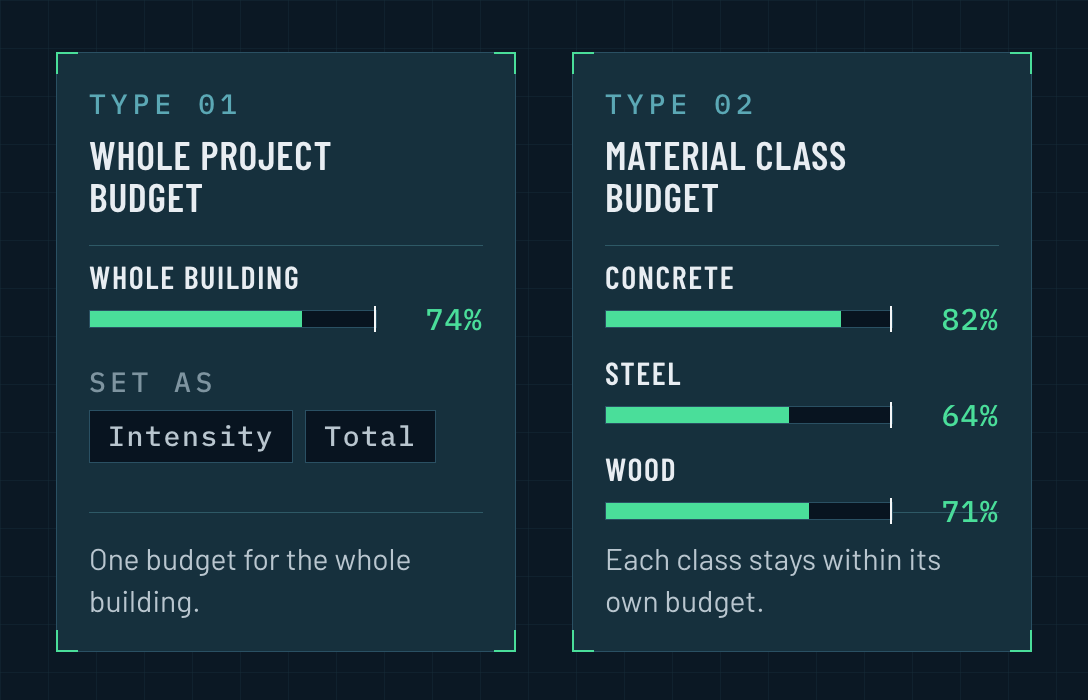
One of the innovations making compliance more accessible is Embodied Carbon Budgets (ECBs) as a reporting pathway. Think of it as a spending limit for carbon. Agencies can set that limit for the whole project or for each material class. Teams work to a total rather than a ceiling on every product. Some applications call for a higher-emitting material, and spending more there and less elsewhere keeps the project within its budget.
Policy makers and agencies can now design their own budgets, starting from templates other jurisdictions have already put to work.
For project teams, BuiltCold now makes budgets easier to track, with compliance calculating automatically as materials are added. WBLCAs still matter for larger, well-resourced projects, but a budget delivers a lot of that impact without the same lift.
03Every phase in one place
Compliance isn’t a single moment. Targets get set in preconstruction, choices get made through design and procurement, substitutions happen during construction, and someone still has to show what actually went into the building at closeout. When those phases live in separate places, the work of proving compliance falls on whoever is holding the folder at the end.
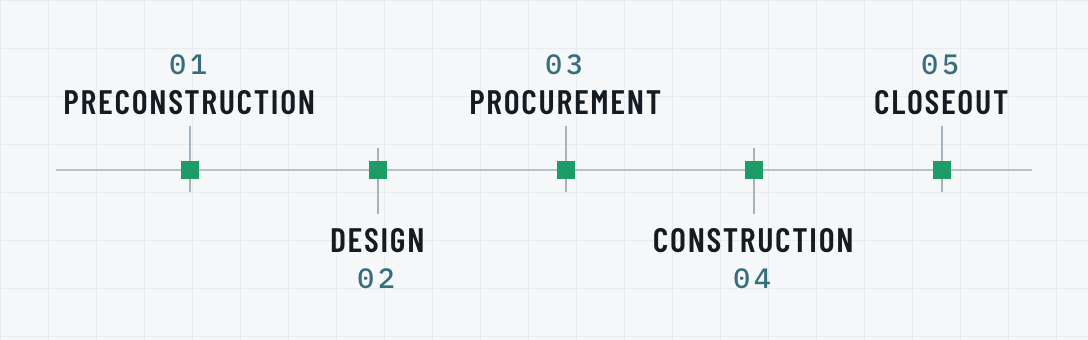
BuiltCold now follows a project across all five phases. Targets set in preconstruction carry into design and procurement, product selections attach to the project as they’re made, and substitutions during construction update the record rather than sitting in someone’s inbox.
The payoff is continuity. Project teams stop reconstructing the story at closeout, since the story has been building itself the whole time. Reviewers get a submittal that reflects what was actually built.
04Out and about
A few places you’ll find us.
BuiltCold will be leading the sessions on how to navigate the database and comply on public projects. The program spans buildings and infrastructure, with two distinct sessions at the Maplewood Transportation Tech Center: vertical 10am to 12pm, horizontal 1pm to 3pm CT. No registration fee.